New UK PM Andy Burnham’s First Comments on Immigration: What ILR Applicants Need to Know
PM Andy Burnham addresses proposed 10-year ILR changes, confirming protection for existing visa holders and social care workers.
Synopsis: Prime Minister Andy Burnham’s first broadcast interview addresses proposed Indefinite Leave to Remain (ILR) changes. While final policy decisions are pending, Burnham signals a balanced approach that protects existing visa holders and supports crucial migrant workers in social care and
healthcare sectors, with official Home Office updates expected soon.
Britain’s new Prime Minister, Andy Burnham, has addressed the proposed changes to Indefinite Leave to Remain (ILR) in his first broadcast interview since taking office on 20 July 2026. In an interview with the BBC, Burnham discussed the controversial plan to raise the length of qualifying time for Indefinite Leave to Remain (ILR) from five to ten years, which was proposed by the previous government.
What Burnham Actually Said
Instead of affirming or dismissing the plan altogether, Burnham took a more balanced approach than his predecessor. He acknowledged growing public calls for tighter immigration controls while also highlighting the valuable role played by migrant workers, particularly those employed in social care. He said care workers arriving in the UK make a genuine contribution to society and should not be unfairly penalised. He added that fairness towards both economic and social care contributors would be an important consideration in the government’s final decision.
Importantly, Burnham indicated that the ILR changes would not affect individuals who were already working and settled in the UK, which would represent a major departure from earlier reports suggesting that it would apply in a ‘retroactive’ way to existing visa holders. He also announced that an update will be released in the coming week.

Why This Matters for Migrants and Care Workers
The social care sector has been identified as having a critical role to play in ensuring the effective functioning of the health system on numerous occasions, and this is because the social care sector will directly impact the capacity of hospital beds. Burnham’s remarks indicate that students, skilled workers and social care workers who have paid their taxes and made a positive economic contribution may be treated more favourably than previously believed under the previous ‘earned settlement’ model.
Quick Reference: Key Points from the Interview
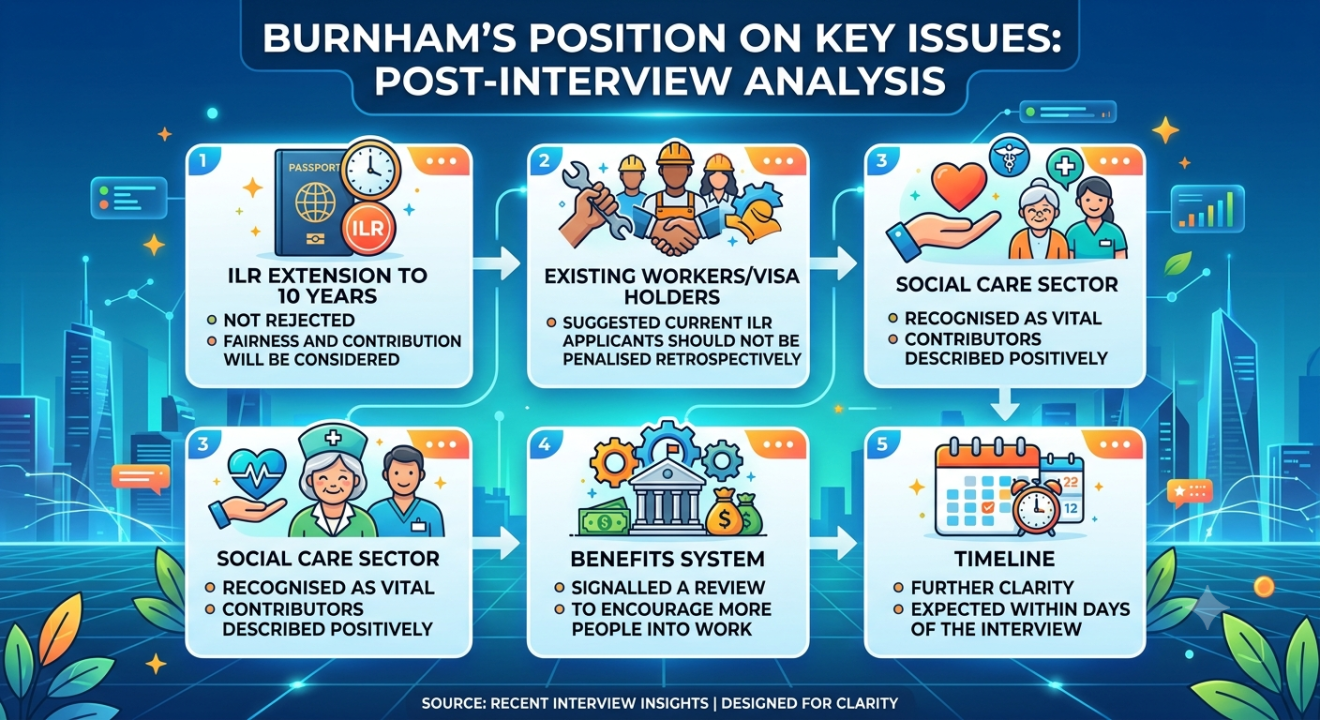
Frequently Asked Questions
Is the ILR 10-year rule confirmed?
No. The extension is not in force as of this interview but rather is under review. If an implementation were to take place, it would need to be accompanied by new immigration rules that would be laid before Parliament.
Will the new rule impact those who are already on a 5-year ILR route?
Burnham’s comments imply that those existing workers already making a contribution to the UK economy might be treated differently, but final transition arrangements are not yet published.
Does this apply to both care workers and skilled workers?
Yes, Burnham was not only talking about low-skilled jobs, but he was talking about care workers and skilled workers, as well as nurses’ dependants.
When will more information be shared?
The interview suggested an update in the next week or so, but this will be subject to parliamentary and consultation timelines.
The Bottom Line
The legal process is yet to be finalised. Existing migrants who are progressing towards ILR will continue to satisfy conditions in place (such as the Life in the UK test) and keep an eye out for updates from the official Home Office announcements and not headlines. The way the government strikes a balance between what the public wants in terms of control and what is economically viable, such as social care and sectors where migrant labour is a key part of the workforce, will shape the final policy, as the tone of Burnham’s speech is quite different from the more strident language of recent months.
This article was taken from an interview with the Prime Minister, which was broadcast on the BBC during his first week in office, and is not a substitute for legal advice on immigration. Always check current requirements through official authority, from the United Kingdom Government, prior to settlement decisions.
